
Key takeaways
- Ceramic coating bonds chemically to your clear coat and protects for years, while wax sits on top of the paint and usually needs reapplying every few months.
- Ceramic coating creates a sharper, glassier shine that makes metallic paint pop, while wax gives a warmer, deeper glow that some owners still prefer on solid colors.
- The two options differ a lot in prep work, cost, and effort, so the right pick depends on your budget and how hands-on you want to be.
- Bay Area conditions like coastal fog, salt air, tree sap, and strong summer sun put more stress on your paint than a mild climate does, and that changes which option makes sense here.
Durability and protection
Ceramic coating bonds directly to your car’s clear coat and cures into a hard, glass-like layer. Once it cures, it stands up to UV rays, bird droppings, road salt, and harsh detergents for one to several years, depending on the product and how well you maintain it.
Wax works differently. It sits on top of the paint as a sacrificial layer rather than bonding to it, which is why it wears down faster. Most waxes last one to three months before strong cleaners, tree sap, or intense sun exposure break them down and you’re back to square one.
| Ceramic coating | Wax | |
| How it works | Bonds chemically to the clear coat | Sits on top of the paint |
| Typical lifespan | 1 to 5+ years | 1 to 3 months |
| UV resistance | Strong | Moderate, fades quickly |
| Chemical resistance | High | Low |
| Reapplication effort | Rare, occasional maintenance | Frequent |
If your car spends its life outside in Santa Clara or anywhere in the South Bay, that gap matters. Coastal fog, salt-laden air, tree sap, and long stretches of direct sun all wear down an unprotected finish faster than they would in a milder climate, and a wax layer simply doesn’t have the staying power to keep up.
Appearance and shine
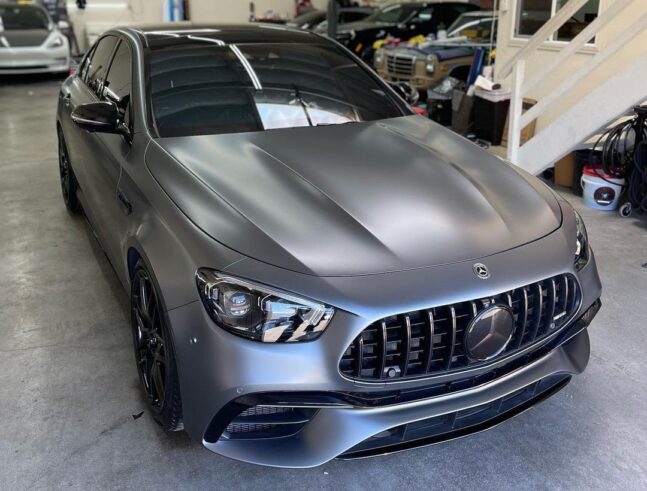
Ceramic coating produces a sharp, highly reflective finish that people often describe as “glassy.” It’s especially striking on metallic paint, where the coating amplifies the depth and sparkle of the flake.
Wax tells a different story. It gives paint a warm, classic glow that a lot of enthusiasts still gravitate toward, particularly on solid or dark non-metallic colors, where that softer look can feel more natural than a mirror finish.
It’s worth saying plainly: the biggest factor in how your car looks isn’t the topcoat at all. Proper paint correction, removing swirl marks, oxidation, and imperfections before any protection goes on, does most of the heavy lifting for the final shine. Ceramic coating and wax both lock in whatever condition your paint is in when you apply them, so starting with corrected paint changes the outcome more than the product choice does.
Application and cost
Ceramic coating asks more of you upfront. Before it goes on, the paint needs a thorough wash, decontamination, and usually paint correction to remove existing imperfections. DIY spray coatings exist at a lower price point, but a professional-grade coating with a multi-year warranty is a bigger investment, and for good reason: it’s designed to last years, not weeks.
Wax is the low-effort, low-cost option. A bottle of quality wax is inexpensive, and you can apply it by hand in a single driveway session with no special prep beyond a wash.
That gap in effort and cost is really a fork in the road: do you want a quick, affordable refresh every few months, or a one-time investment that protects your paint for years with almost no upkeep? For daily drivers that live outside, the second option tends to pay for itself in time saved alone.
What is ceramic coating? What is wax?
If you’re still not sure what’s actually happening on your paint with each one, here’s the short version.
Ceramic coating is a liquid polymer, usually silica-based, that chemically bonds to your car’s clear coat when it cures. Instead of resting on the surface, it becomes part of it, which is why it holds up so much longer.
Wax is a blend of natural or synthetic materials, most commonly carnauba or synthetic polymers, that forms a protective film on top of the paint. It never bonds to the surface the way ceramic coating does, so it breaks down and washes away over time.
Picture wax as a raincoat you put on over your clothes: it does its job, but you take it off, and it wears out. Ceramic coating is more like the fabric of the clothing itself, worked into the material so it’s part of the surface rather than a layer on top of it.
Which should you choose?
It comes down to how you use your car.
If your vehicle is a weekend car or a show piece that spends most of its time garaged, wax can be a satisfying, hands-on ritual, and the shorter lifespan matters less because you’re not fighting daily exposure.
If your car is a daily driver that sits outside in Santa Clara traffic, gets hit by fog off the bay, and bakes in the sun during a South Bay summer, ceramic coating is the more practical choice. It protects through all of it without asking you to redo the work every few weeks.
Can you use both?
Technically, yes, but it rarely makes sense. Ceramic coating already outperforms wax on every measure that matters, and adding wax on top of a cured coating can actually dull the finish and interfere with its hydrophobic properties. If you want that extra warmth wax gives, apply it before the coating goes on, not after.
How often do you need to reapply each?
Wax needs attention every four to twelve weeks, depending on how much sun and road grime your car sees. Skip too many cycles and the paint loses its protection right when it needs it most.
Ceramic coating asks far less of you. Beyond an occasional rinse and the right maintenance products, a properly applied coating doesn’t need a full reapplication for years.
How each one is applied
Waxing is simple enough to do yourself: wash the car, apply a thin coat with an applicator pad, let it haze for a few minutes, then buff it out with a clean microfiber towel.
Ceramic coating is a different process altogether. It starts with a full wash and decontamination, then paint correction to remove existing swirls and imperfections, then the coating itself, applied in careful sections and given time to cure properly. Get any step wrong, uneven application, contaminated surface, insufficient cure time, and the coating won’t perform the way it’s supposed to. That’s the main reason most people leave ceramic coating to a certified professional rather than tackling it in the driveway.
Ceramic Coating vs Wax FAQs
How long does ceramic coating last compared to wax?
Ceramic coating typically lasts one to five years or more, while wax lasts one to three months before it needs reapplying.
Is ceramic coating worth the extra cost?
For a daily driver parked outside, most owners find it worth it. The upfront cost is higher, but you skip months of repeat waxing and get stronger protection the whole time.
Can I wax a car that already has ceramic coating?
You can, but it’s rarely a good idea. Wax can dull the coating’s finish and interfere with its water-repelling properties. A ceramic-safe maintenance spray is a better way to refresh the shine.
How often should I wash a ceramic-coated car?
Regular washing is still important. Ceramic coating protects the paint, but dirt and grime still need to be rinsed off to keep the surface looking its best.
Does ceramic coating hold up in fog, salt air, and strong sun?
Yes, and that’s exactly where it separates itself from wax. Ceramic coating’s UV and chemical resistance make it a strong fit for Bay Area conditions that wear wax down quickly.
Next steps for ceramic coating vs. wax
Ceramic coating and wax both protect your paint, but they’re built for different jobs. Wax gives you an affordable, hands-on option with a shine you’ll need to renew every few months, while ceramic coating trades a bigger upfront investment for years of protection that fits the way Bay Area cars actually get used.
If you’re weighing the two, the simplest next step is to think honestly about how your car lives: garaged and pampered, or parked outside and driven daily through fog, sun, and traffic. That answer usually makes the decision for you.
If you land on ceramic coating, it’s worth having it done right the first time. Alphawerks is an XPEL-certified installer in Santa Clara, and our team applies XPEL’s Fusion Plus ceramic coating with the paint correction and prep work that make it hold up for years, not months. Take a look at our ceramic coating service to see how it works and get a free quote for your car.

- Is Ceramic Coating Worth It? An Honest Cost And Value Breakdown - September 9, 2026
- Navigating California’s Window Tinting Laws in 2026: What You Need to Know - August 5, 2026
- Top Car Wrap Colors of 2026: Trends, Tips, and Quality Brands for a Stunning Finish - July 30, 2026